Gross vs Net Income in Australia: What’s the Difference?
Gross income is what you earn before anything is taken out. Net income is what actually lands in your bank account after tax and other deductions. The gap between them is usually 15% to 30% for full-time workers in Australia, and knowing which figure someone is talking about saves a lot of confusion when you compare job offers, apply for a loan or set a budget.
Gross vs net at a glance
| Gross income | Net income | |
|---|---|---|
| Also called | Pre-tax pay, base salary | Take-home pay, after-tax pay |
| Includes tax? | Yes, tax has not been taken out | No, tax has been taken out |
| Where you see it | Job ads, contracts, top of your payslip | Bottom of your payslip, bank statement |
| Used for | Loan applications, tax brackets, salary comparisons | Budgeting, rent, everyday spending |
From gross to net: a $75,000 example
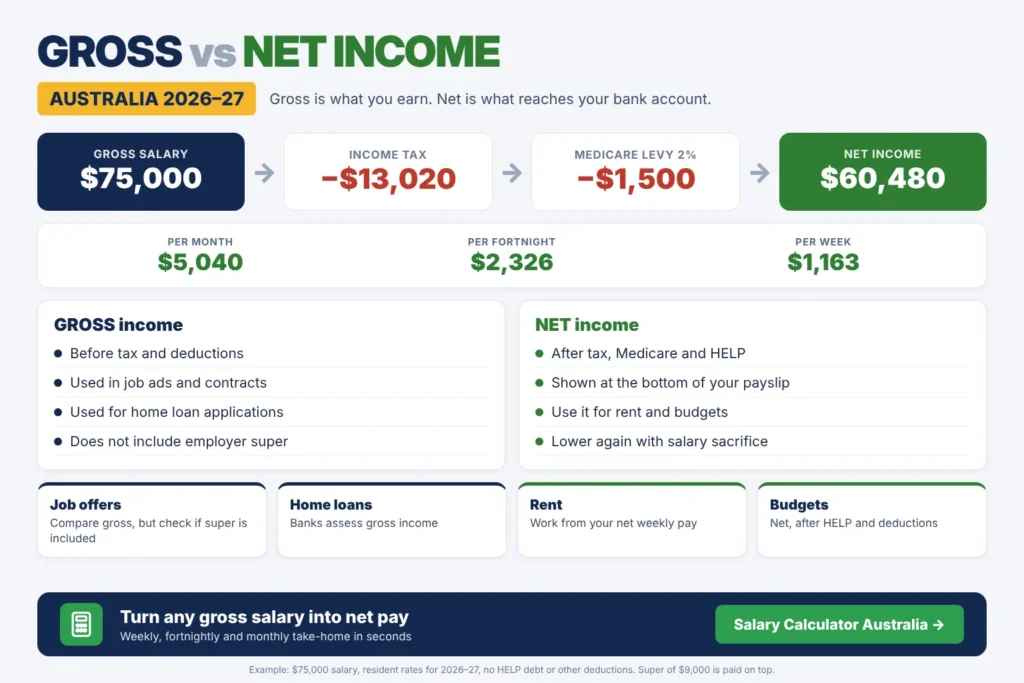
Here is how a $75,000 salary becomes take-home pay for a resident in 2026–27.
- Gross salary: $75,000
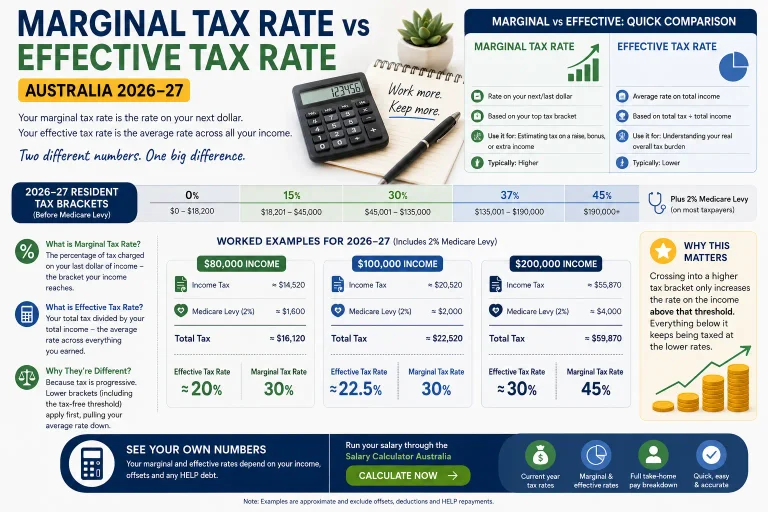
- Income tax: $13,020
- Medicare levy at 2%: $1,500
- Net income: $60,480 a year, or about $2,326 a fortnight
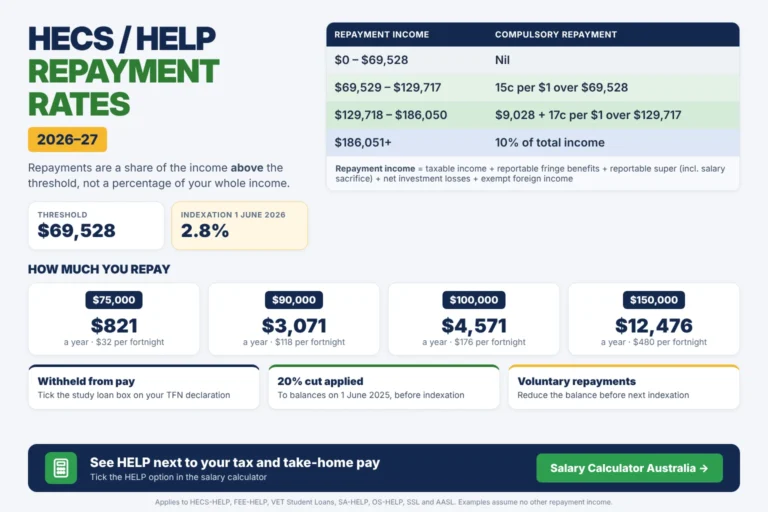
With a HELP debt, a further $821 is taken out, and the net figure drops to $59,659. Your employer also pays $9,000 into super, but that money is on top of your gross salary and does not appear in either figure.
Net pay per month, fortnight and week
Resident rates for 2026–27, no study loan and no other deductions.
| Gross salary | Net per year | Net per month | Net per fortnight | Net per week |
|---|---|---|---|---|
| $50,000 | $43,730 | $3,644 | $1,682 | $841 |
| $65,000 | $53,705 | $4,475 | $2,066 | $1,033 |
| $75,000 | $60,480 | $5,040 | $2,326 | $1,163 |
| $90,000 | $70,680 | $5,890 | $2,718 | $1,359 |
| $110,000 | $84,280 | $7,023 | $3,242 | $1,621 |
| $130,000 | $97,880 | $8,157 | $3,765 | $1,882 |
If you are paid every two weeks, the fortnightly pay calculator turns any gross fortnightly amount into net pay and shows the occasional 27-pay year.
What counts in your gross income
Gross pay is more than your base rate. It also includes:
- overtime and penalty rates
- casual loading
- most allowances, such as tool or travel allowances
- bonuses and commissions
- paid leave and leave loading
Employer super is the main thing that is not included. Reimbursements for money you spent on the job are also usually left out.
What comes out between gross and net
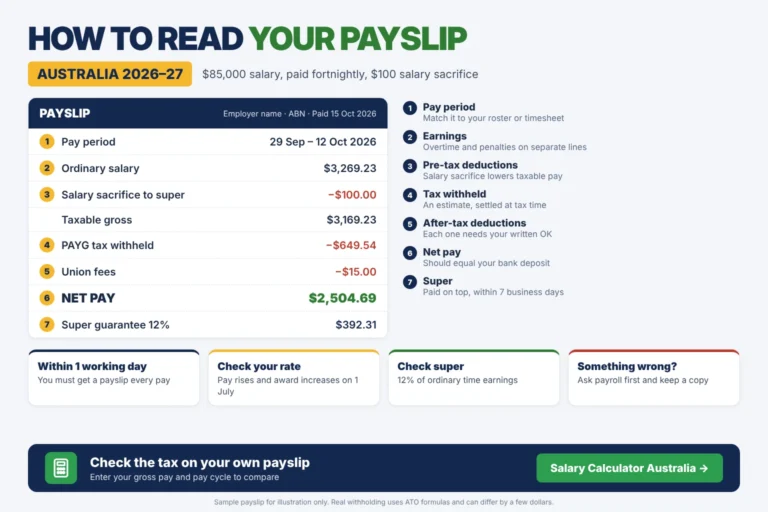
- PAYG tax withheld, which covers income tax and the Medicare levy. You can find it on every pay using our guide to reading a payslip.
- Study loan repayments, if your income is over the HELP threshold.
- Pre-tax deductions, such as salary sacrifice. These lower your taxable pay before tax is worked out.
- After-tax deductions, such as union fees, workplace giving or a social club.
Charity and hospital staff can also pay some bills before tax. Our salary packaging calculator shows how that lifts net pay without changing gross salary.
Watch out for “including super” job ads
A job advertised at “$90,000 including super” does not pay a $90,000 gross salary. The super is carved out of that figure, so your gross salary is about $80,357 and your net pay is lower than an offer of “$90,000 plus super”. The package vs plus super section of our main calculator splits a package into salary and super for you.
Gross hourly rate vs net hourly rate
Hourly rates are almost always quoted gross. A $35-an-hour job at 38 hours a week is $1,330 a week before tax, or about $1,087 after tax. To compare an hourly job with a salaried one, convert both to the same basis with the salary to hourly converter, then compare the net figures.
Which figure to use when
- Comparing job offers: gross, but check whether super is included.
- Applying for a home loan: gross, backed by payslips and tax returns.
- Working out what rent you can afford: net.
- Setting a monthly budget: net, after any HELP and salary sacrifice.
- Working out your tax bracket: taxable income, which is gross minus deductions.
Frequently asked questions
Is gross income before or after tax?
Before. Gross income is what you earn before tax and any other deductions are taken out. Net income is what is left and what is paid into your bank account.
Is super part of my gross income?
Usually not. The 12% super guarantee is paid by your employer on top of your gross salary, unless your job is advertised as a package that includes super. Check the wording in your contract.
What gross income do banks and landlords ask for?
Lenders normally ask for your gross annual income and then check it against your payslips and tax return. Landlords and real estate agents more often look at your net weekly pay, because that is what you have to pay rent from.
Is net income the same as taxable income?
No. Taxable income is your gross income minus allowable deductions, and it is what your tax is calculated on. Net income, in everyday use, means your pay after tax has been withheld.
Why is my net pay lower than a calculator says?
Payroll may also take out a HELP repayment, salary sacrifice, union fees or other deductions you agreed to. Withholding tables also round to whole dollars and assume the same pay every period.
What does ‘gross up’ mean?
Grossing up is working backwards from a net figure to the gross amount needed to produce it. For example, if you want $1,500 a week in your account, you need a gross wage of about $1,940 a week in 2026–27.