How to Read Your Payslip in Australia: A Line-by-Line Guide
Your payslip tells you exactly what you earned, what was taken out and what was paid into your super. Checking it every pay takes less than a minute once you know where to look, and it is the easiest way to catch underpayments, wrong tax or missing super. This guide walks through each section of a typical Australian payslip using a real example.
An example payslip
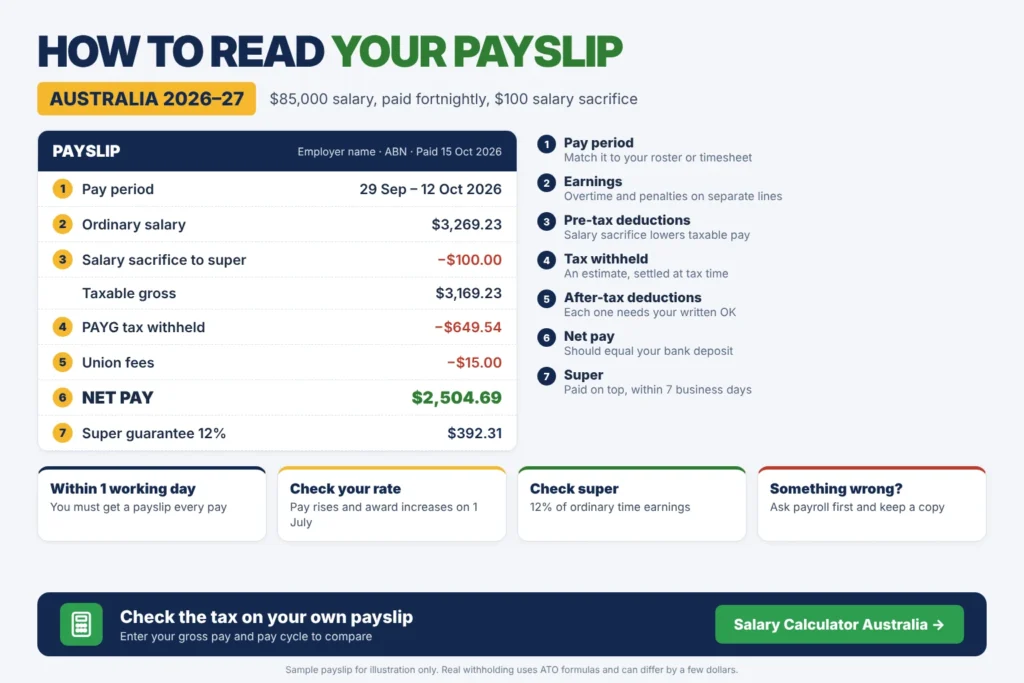
Sam earns an $85,000 salary, is paid fortnightly, claims the tax-free threshold, salary sacrifices $100 a fortnight into super and pays $15 a fortnight in union fees.
| Item | This pay |
|---|---|
| Pay period | 29 Sep 2026 – 12 Oct 2026 |
| Ordinary salary | $3,269.23 |
| Salary sacrifice to super | -$100.00 |
| Taxable gross | $3,169.23 |
| PAYG tax withheld | -$649.54 |
| Union fees | -$15.00 |
| Net pay | $2,504.69 |
| Super guarantee (12%) | $392.31 |
| Annual leave balance | 84.6 hours |
The tax figure is an estimate. Real payroll systems use the ATO’s withholding formulas, so your own payslip may differ by a few dollars.
What every payslip must show
Under the Fair Work rules, a payslip must include:
- your employer’s name and ABN, if it has one
- your name
- the pay period and the date you were paid
- gross and net pay
- any loadings, allowances, bonuses, penalty rates or other separate payments
- every deduction, with what it was for
- for hourly workers, the ordinary hourly rate, the hours paid at that rate and the amount
- for salaried workers, your annual salary at the end of the pay period
- any super paid for you and the fund it went to
Reading it section by section
1. Pay period and pay date
Check that the dates line up with the hours you actually worked. Casual and shift workers should compare the hours against their roster or timesheet.
2. Earnings
Each type of pay should be listed on its own line: ordinary hours, overtime, weekend penalties, allowances. If everything is lumped into one figure, ask payroll for a breakdown. If you are paid by the hour and want to check the total, multiply your rate by the hours shown, or use the weekly pay calculator, which starts from an hourly rate.
3. Pre-tax deductions
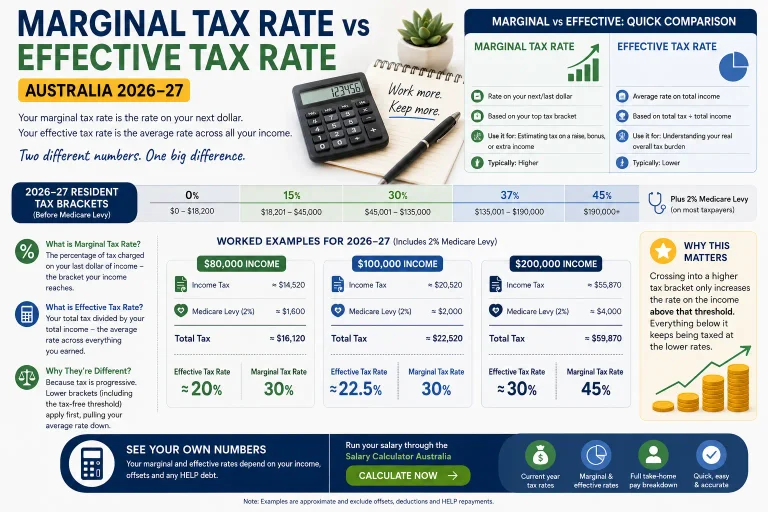
Salary sacrifice comes out before tax, so it lowers your taxable gross. In Sam’s case, $100 to super reduces his take-home pay by noticeably less than $100, because less tax is withheld. Our salary sacrifice calculator shows that trade-off for your own salary.
4. Tax withheld
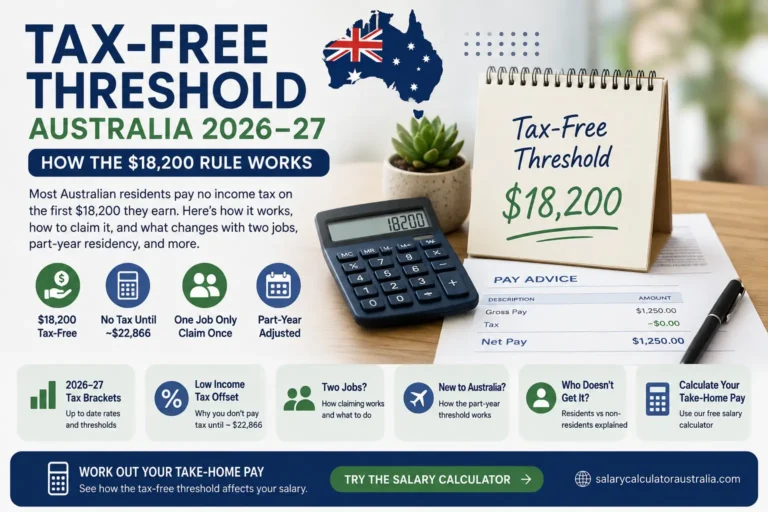
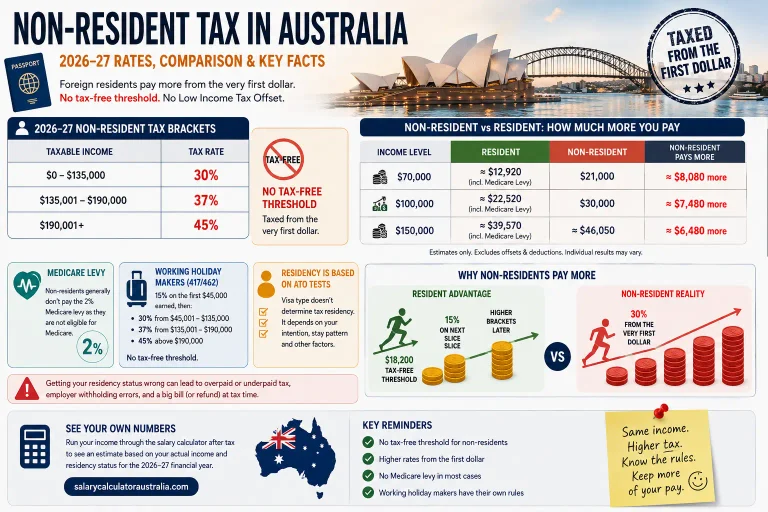
This is PAYG withholding: an estimate of your income tax and Medicare levy, plus any HELP repayment. It is not your final tax bill. If the amount looks too high or too low, the most common cause is the tax-free threshold. You should usually claim it from only one employer, as our guide to claiming the $18,200 threshold explains.
5. Post-tax deductions
Union fees, workplace giving, social club and similar amounts come out after tax. Each one needs your written agreement, and each should appear on the payslip with its purpose.
6. Net pay
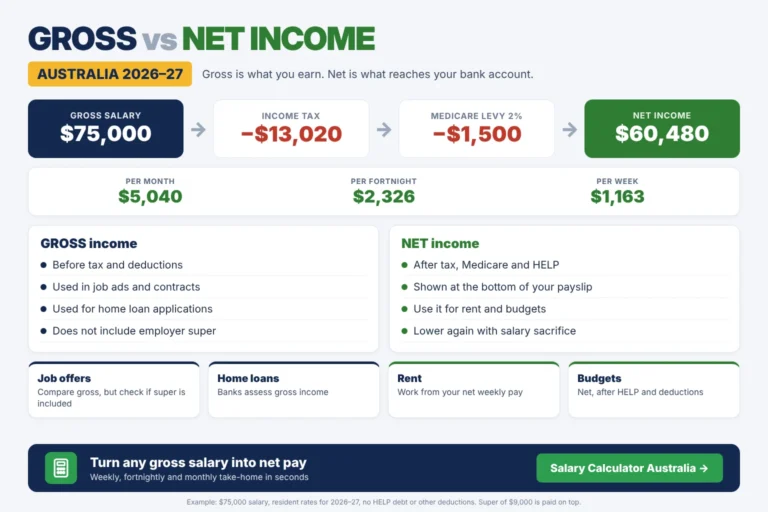
This is the figure that should match the deposit in your bank account. If it does not, ask payroll straight away. Not sure why it is so much lower than your salary? The difference is explained in gross vs net income.
7. Super
Your employer’s 12% super guarantee is paid on top of your pay, not out of it. From 1 July 2026, under Payday Super, employers must pay super at the same time as wages, and it must reach your fund within 7 business days. Compare the payslip figure with your super account every few pays. Missing super is one of the most common pay problems.
8. Leave balances and year-to-date totals
Many payslips also show leave balances and year-to-date figures. Leave is not always a legal requirement on a payslip, but it is useful to track. The YTD gross and tax figures let you check you are on track for the year: multiply your normal gross pay by the number of pays so far and compare.
Five quick checks every payday
- Your hourly rate or salary is correct and has gone up with any pay rise or award increase.
- Overtime and penalty hours are paid at the right rate.
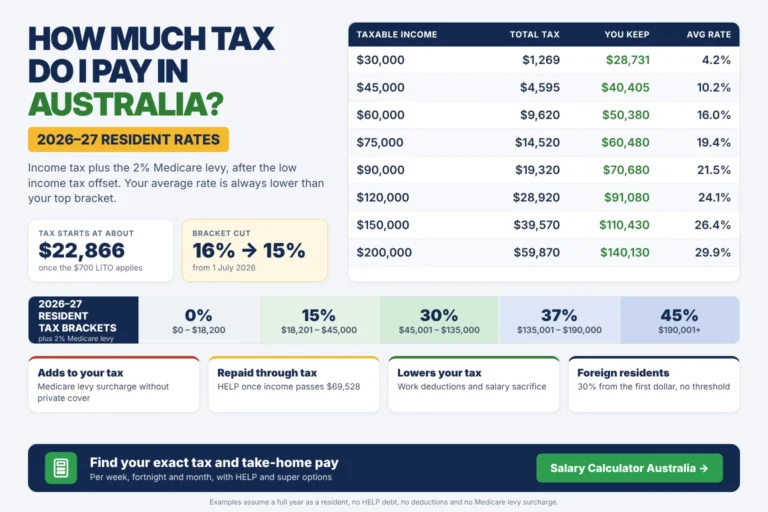
- The tax withheld looks right for your pay. Enter your gross pay in the PAYG calculator to compare.
- Super has been calculated at 12% of your ordinary time earnings.
- Net pay matches the amount in your bank account.
Common payslip mistakes
- Old pay rates after a minimum wage or award increase on 1 July. The national minimum wage rose to $26.44 an hour from 1 July 2026.
- Two employers both applying the tax-free threshold, which leads to a tax bill at the end of the year.
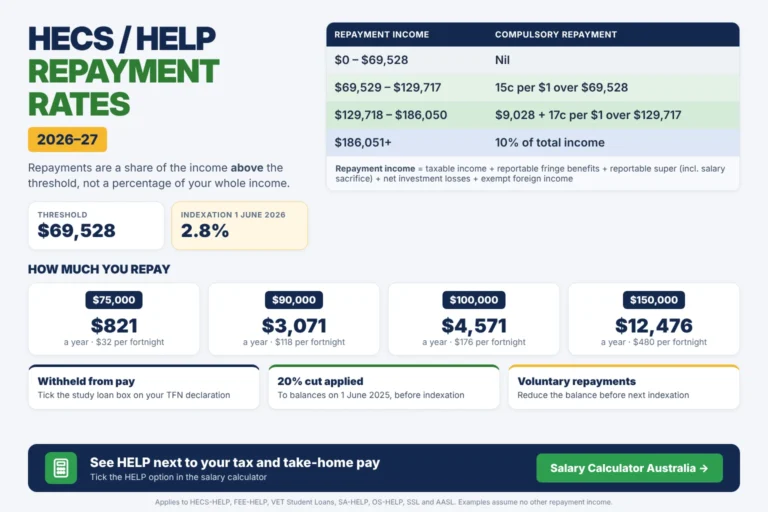
- HELP not being withheld because the box was not ticked on the TFN declaration.
- Super calculated after salary sacrifice instead of before. The 12% must be worked out on your pay before sacrifice.
- Missing casual loading or penalty rates on weekend shifts.
Frequently asked questions
When should I get my payslip?
Employers must give you a payslip within one working day of paying you, even if you are on leave. It can be on paper or sent electronically.
Does my payslip have to show super?
Yes, if your employer has to pay super for you. It must show the amount and the name of the fund, or the fund’s name and number.
Why is the tax on my payslip different from my friend’s on the same salary?
The amount withheld depends on your TFN declaration. Claiming the tax-free threshold, having a study loan, or salary sacrificing all change the tax taken out of each pay.
What does YTD mean on a payslip?
YTD means year to date. It is the running total since 1 July of the current financial year, and it is the quickest way to check your pay over a longer period.
What should I do if my payslip is wrong?
Raise it with your payroll team or manager first and keep a copy of the payslip. If it is not fixed, you can contact the Fair Work Ombudsman for help with pay and payslip problems, or the ATO if your super is missing.
How long should I keep my payslips?
Keep them at least until you have lodged your tax return and confirmed your super has been paid. Employers must keep pay records for 7 years.