Tax Refund or Tax Bill? Why You Got Yours and How to Fix It
Written by: Salary Calculator Australia Editorial Team · Fact-checked against: ATO 2026–27 tax rates, Medicare levy and HELP thresholds · Last reviewed: October 2026
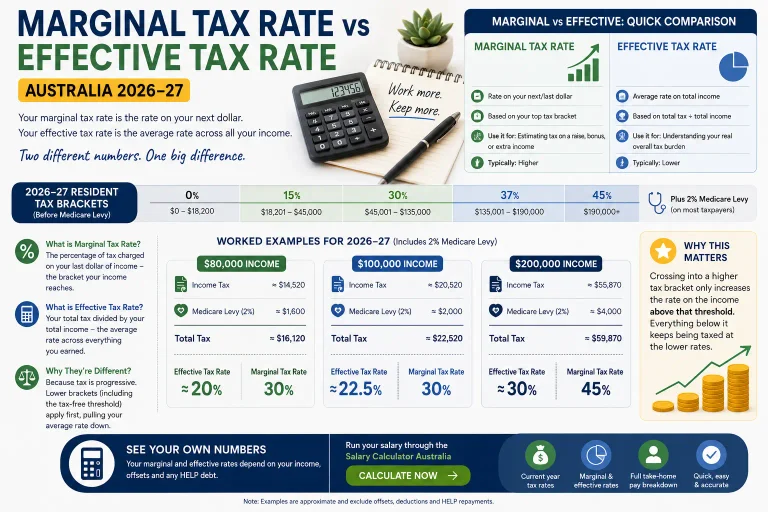
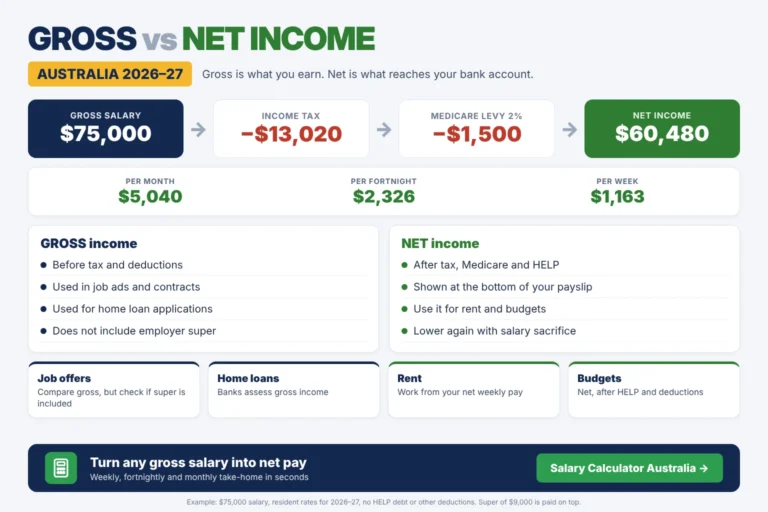
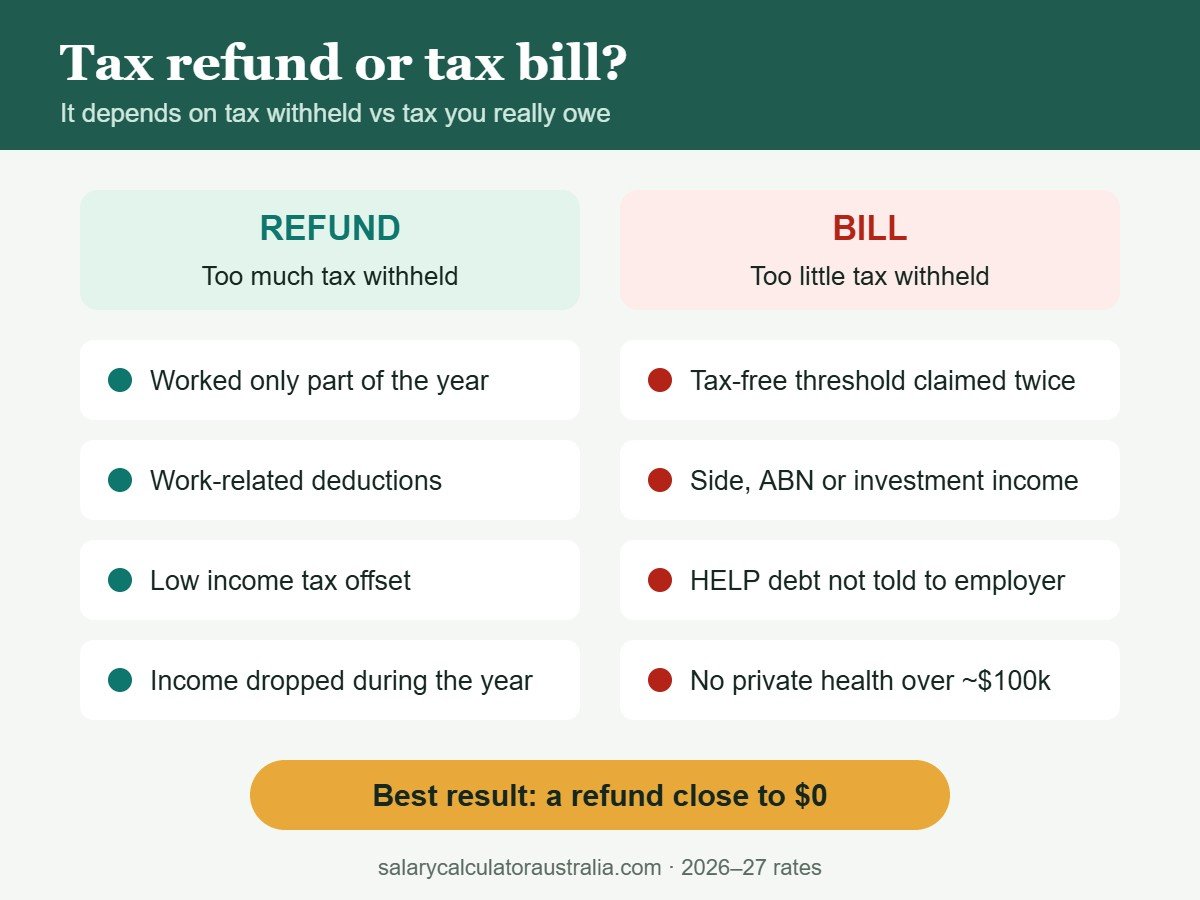
Whether you get a tax refund or a tax bill comes down to one thing: how much tax your employer took from your pay during the year compared with the tax you actually owe. If too much was taken, you get the difference back as a refund. If too little was taken, you pay the difference as a bill.
Below are the most common reasons for each, so you can understand your result and fix it for next year.
How your tax return works, in one minute
- During the year: each employer withholds tax from every pay, based on what they pay you.
- At tax time: the ATO adds up all your income, takes off deductions and offsets, and works out your real tax.
- The result: real tax minus tax already withheld. A negative number is a refund, a positive number is a bill.
So a refund isn’t a bonus from the government. It is your own money that was over-withheld during the year.
7 common reasons you got a tax refund
- You worked only part of the year. Your employer withheld as if you earned that pay all year, but your actual income was lower. Students and people who changed jobs see this often.
- Your income dropped because of fewer hours, unpaid leave or a break between jobs.
- You claimed work-related deductions, like tools, uniforms, work travel, union fees or working from home costs.
- You made personal super contributions and claimed a deduction for them.
- The low income tax offset reduced your tax. It is worth up to $700 if your income is $37,500 or less.
- You had a second job with a low total income, so the second employer withheld more than you needed.
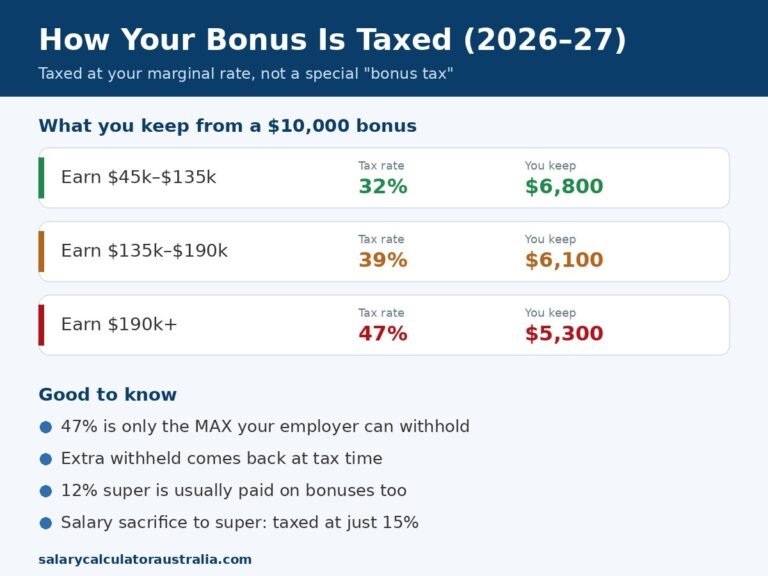
- You received a lump sum or bonus that was taxed heavily when paid but less once your whole year was counted.
7 common reasons you got a tax bill
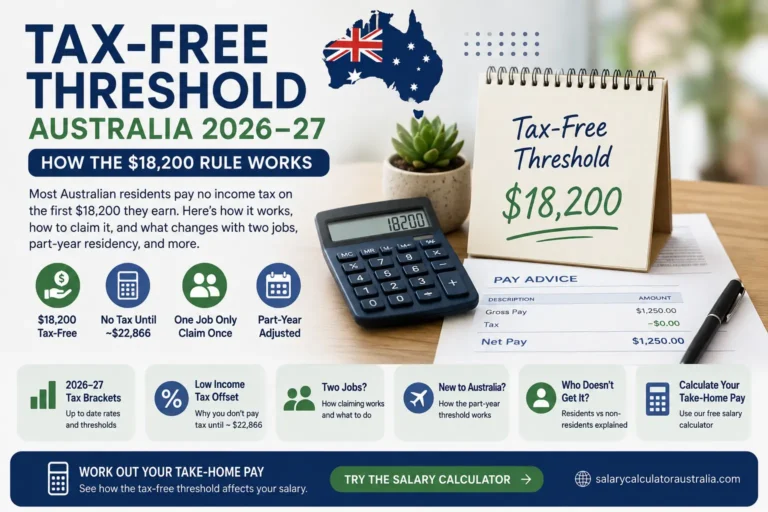
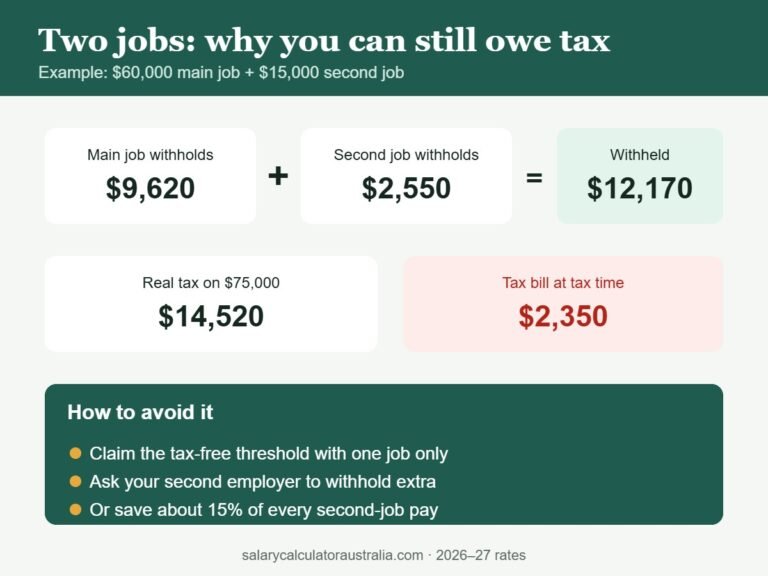
- You claimed the tax-free threshold with two employers, so your first $18,200 was untaxed twice. Read our guide to tax on a second job to fix this.
- You had income with no tax withheld, like freelance or ABN work, rent, interest, dividends, crypto gains or government payments.
- You have a HELP debt but didn’t tell your employer, so repayments weren’t withheld. Check the HELP repayment rates for your income.
- You earn over about $100,000 (single) without private hospital cover and had to pay the Medicare levy surcharge.
- You received a big pay rise late in the year or a large amount of overtime.
- Salary sacrifice or fringe benefits were reported and pushed up your income for things like HELP or the surcharge.
- Your tax-free threshold box was ticked on a job you should not have claimed it on, for example as a non-resident. Non-residents can’t claim it, see non-resident tax rates.
Example: why two similar workers got different results
| Priya | Josh | |
|---|---|---|
| Total income | $60,000 from one job | $60,000 from two jobs ($45,000 + $15,000) |
| Tax-free threshold claimed | Once | On both jobs |
| Tax withheld | About $9,620 | About $4,600 |
| Real tax owed | About $9,620 | About $9,620 |
| Result | About $0 + any deductions back | A bill of about $5,000 |
Both earn the same and owe the same tax. Josh’s bill came only from his tax being under-withheld during the year.
How to get closer to $0 next year
A small refund is the best result. It means your pay was right all year and you weren’t short of cash. A big refund means you lent the ATO money for free, and a big bill means you need to find cash in one go.
- Check the tax-free threshold setting on each job. Claim it only once. Our guide to the $18,200 threshold explains when to tick yes.
- Tell every employer if you have a HELP debt.
- If you have side or investment income, put about 30% of it aside or ask your employer to withhold extra.
- Review your payslip each pay to catch problems early.
- Use a pay calculator with tax to check that your take-home pay matches what you expect.
When do you get your refund, and when is a bill due?
- Lodging: the tax year ends on 30 June. If you lodge yourself, your return is due by 31 October.
- Refunds: most online returns are processed within about two weeks.
- Bills: if you lodge yourself, payment is usually due on 21 November. If you use a registered tax agent, your dates are often later.
- Can’t pay all at once? The ATO offers payment plans. Contact them before the due date.
Common questions
Why did I get a tax refund?
Because more tax was withheld from your pay during the year than you actually owe, often due to working part of the year, deductions or the low income tax offset.
Why do I owe tax this year?
Usually because too little tax was withheld, for example from claiming the tax-free threshold twice, having income with no tax withheld, or not telling your employer about a HELP debt.
Is a big tax refund good?
Not really. It means too much tax was taken during the year. A refund close to zero means your pay was right all year.
When is my tax bill due?
If you lodge your own return, payment is usually due on 21 November. Tax agent clients often have later dates.
How long does a tax refund take?
Most returns lodged online are processed in about two weeks.